Formal qualifications, practical study and competitive challenges across different parts of cybersecurity.
Nine qualifications, as listed in my CV. These notes explain why I pursued each one, what it added to my approach, and how it connects to my work. The original credential records and artwork are kept alongside them.
I wanted to approach a penetration test as a complete engagement: understand the environment, follow an attack path, document the evidence and explain the result clearly.
What it added
PNPT strengthened the connection between technical testing and reporting. It gave me a more deliberate way to organize reconnaissance, network findings and remediation advice into a result that another person can understand and act on.
How I use that perspective
That approach carries into how I document security work and explain technical decisions when teaching.
Practical testing sits inside a wider security picture. I took Security+ to connect technical weaknesses with access control, risk, protective measures and the everyday responsibilities of a security team.
What it added
It helped me organize security fundamentals into a common framework. That makes it easier to explain why a control matters, discuss a finding with people in different roles and connect an individual technical issue to its wider consequences.
How I use that perspective
This foundation is particularly useful when introducing cybersecurity concepts to learners before moving into hands-on labs.
Web applications are an area where development and offensive security meet. I pursued this qualification to investigate application behavior more deeply and understand how weaknesses can interact across a testing workflow.
What it added
It developed a more systematic approach to web reconnaissance, authentication behavior and injection risks. The useful habit is to follow the evidence through an application, test assumptions and explain the impact of a finding in its actual context.
How I use that perspective
This perspective complements my application projects, where account access and administrative workflows make security decisions tangible.
Alongside offensive testing, I wanted to understand how defenders find activity that deserves investigation. Threat hunting gave that interest a structured direction: start with a question and test it against the available evidence.
What it added
It strengthened my approach to working with network traffic, endpoint information and indicators of compromise. I became more deliberate about correlating clues, checking alternative explanations and separating an interesting signal from a defensible conclusion.
How I use that perspective
That investigative perspective connects to the SOC learning environment at APU and the monitoring tools in my security lab.
After building an initial penetration-testing foundation, I wanted a more connected assessment process. eCPPT was a way to develop the decisions between discovery, exploitation and understanding what access means inside an environment.
What it added
It reinforced patient enumeration, methodical testing and the need to keep track of evidence as an assessment develops. Those habits help turn a collection of successful techniques into a coherent explanation of an environment's weaknesses.
How I use that perspective
I carry that method into lab work: understand the services and their relationships before drawing conclusions about their security.
eJPT was an early practical milestone in my offensive-security learning. I wanted a structured way to move from understanding security concepts to examining hosts, services and applications in a lab.
What it added
It helped establish the habits I still return to: enumerate carefully, understand what a service exposes, choose the next test for a reason and record what happened. It also provided a foundation for the more advanced penetration-testing study that followed.
How I use that perspective
That progression shapes how I introduce practical exercises to learners: establish a method before adding complexity.
My interests span infrastructure, offensive testing and defensive operations. RCCE gave me a way to study those areas together and consider how a weakness, an attack technique and a protective measure relate to one another.
What it added
It broadened the engineering context around individual security tasks. I look at assessment and defense together, using testing to inform configuration, monitoring and the next improvement to an environment.
How I use that perspective
This is close to the thinking behind my FYP: security monitoring works within a larger environment of services, routing and infrastructure.
Building applications made me interested in the security decisions behind their features. I took CAP to organize the common application-security risks and relate them to the way software is designed and developed.
What it added
It gave me a clearer vocabulary for discussing application weaknesses and secure-development practices. That foundation helps me ask more useful questions about input handling, authentication, access decisions and how a feature could be misused.
How I use that perspective
The Flask banking project gives those questions a concrete setting through account, transaction and administration workflows.
During my studies at APU, I wanted my cybersecurity learning to include an applied engineering perspective. This qualification forms part of that academic journey alongside the coursework and practical learning recorded in this portfolio.
What it added
It helped bring my academic interests into a clearer professional direction: understanding systems, considering their security and building the foundation for more specialized study. I treat it as part of the learning process that continued through labs, projects and later qualifications.
How I use that perspective
The academic section keeps the original achievement certificate together with my APU studies, supporting records and dual-degree story.
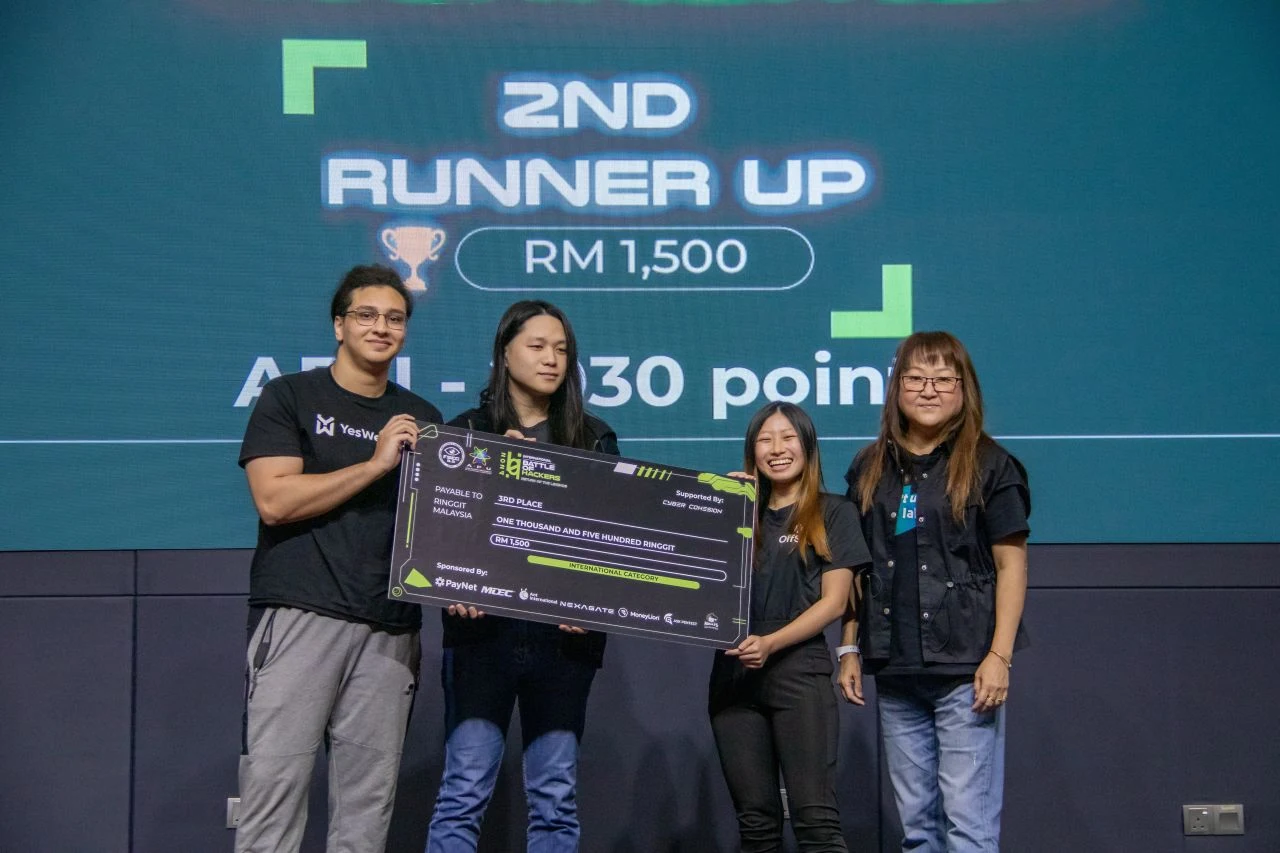
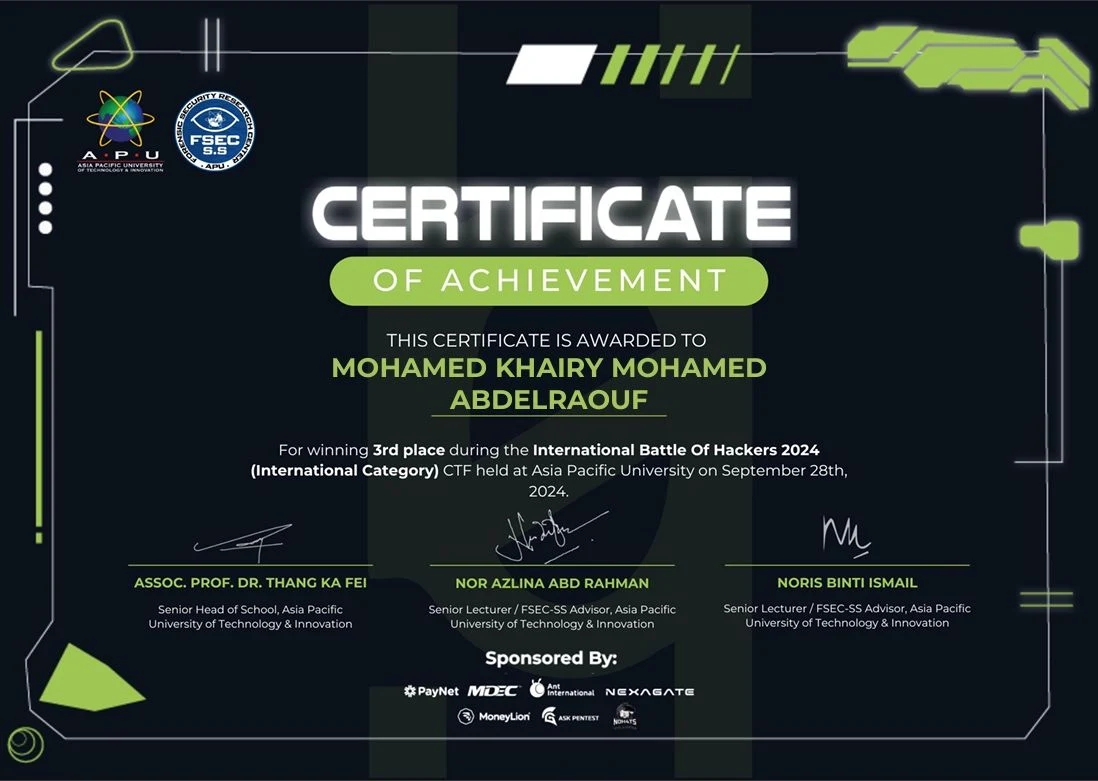
International Battle of Hackers · International Category
IBOH 2024
3rd placeSecond runner-up
28 September2024 · Asia Pacific University
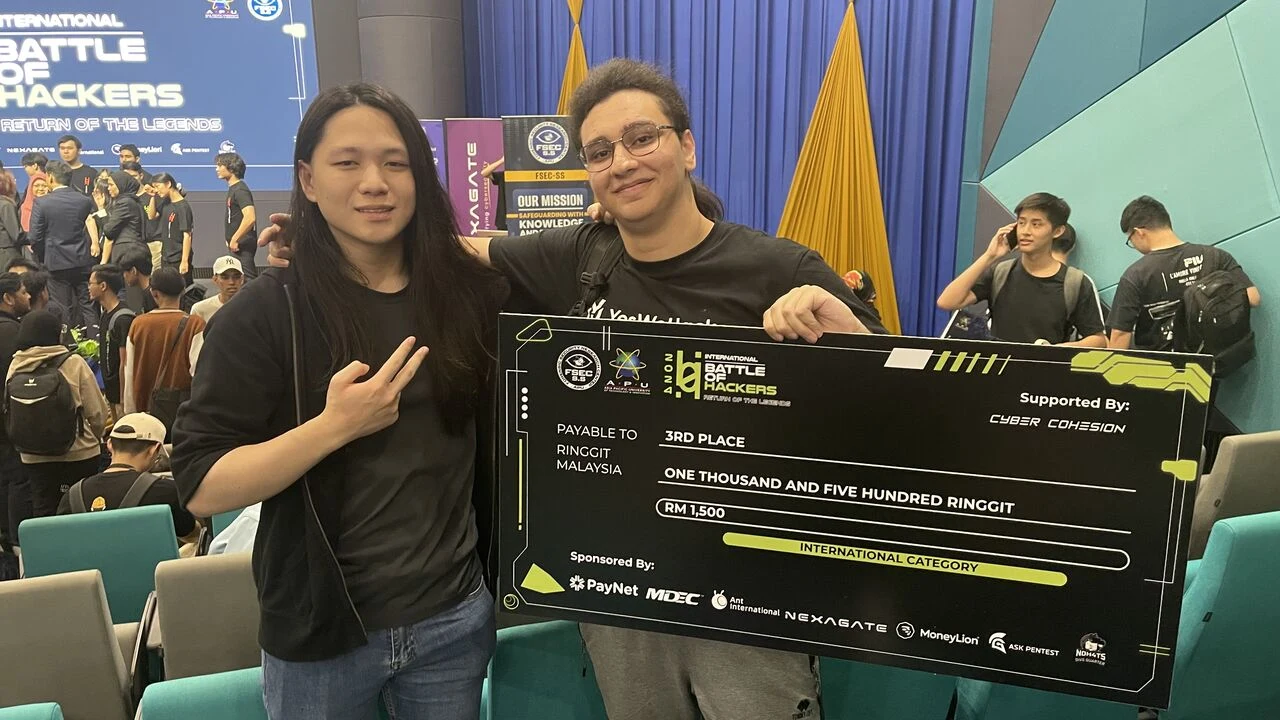
Proud to be the second runner-up at IBOH 2024. This was a team achievement, shared with Howard Chau and Chang Shiau Huei.
View image ↗PhotographReceiving the third-place award at IBOH 2024.
View image ↗PhotographCelebrating the result with the third-place award board.View image ↗PhotographA moment from the audience at IBOH 2024.View image ↗CredentialThe achievement certificate: third place, International Category, 28 September 2024.Download image ↓
With thanks to the people behind the event
Thank you to speakers Meling Mudin, Khairul Naim Zainal Abidin, Farzan Nobi and Bin Zhou (Sinbad); forum moderator and my RCCE instructor, Asst. Prof. Ts. Dr. Vinesha Selvarajah; and the Forensic & Security Research Center Student Section at APU for their support.
Competition report / January 2026
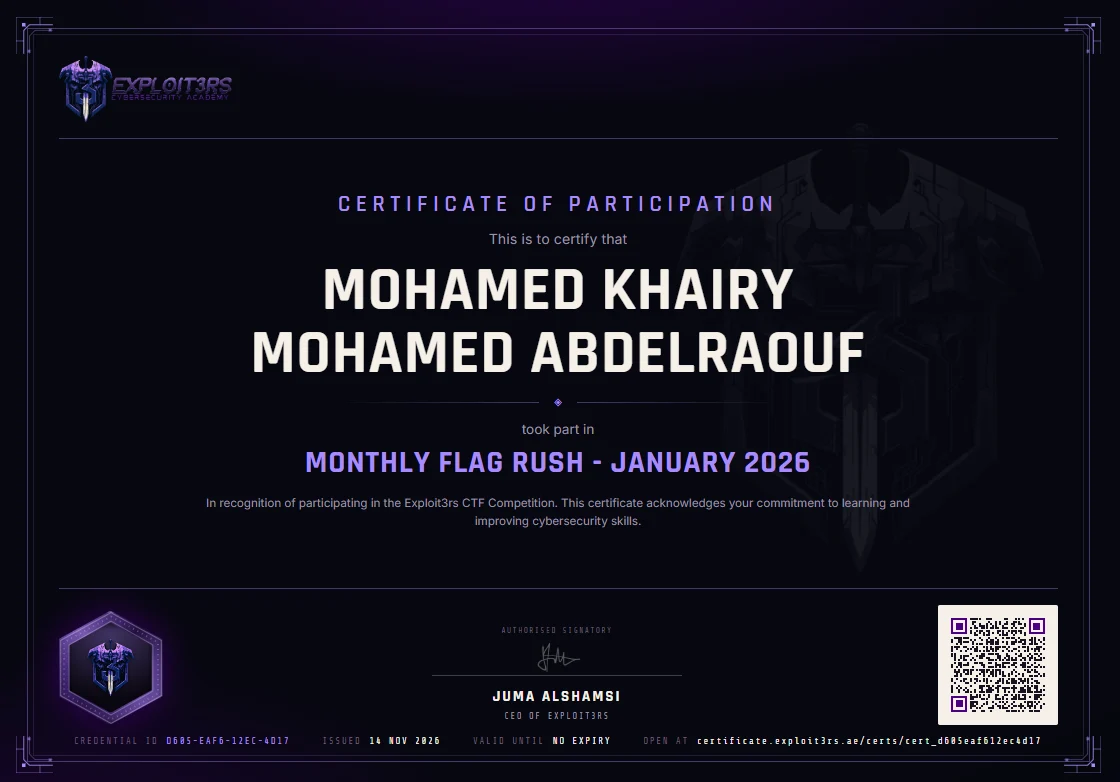
Monthly Flag Rush
الفريق قبل الكأس
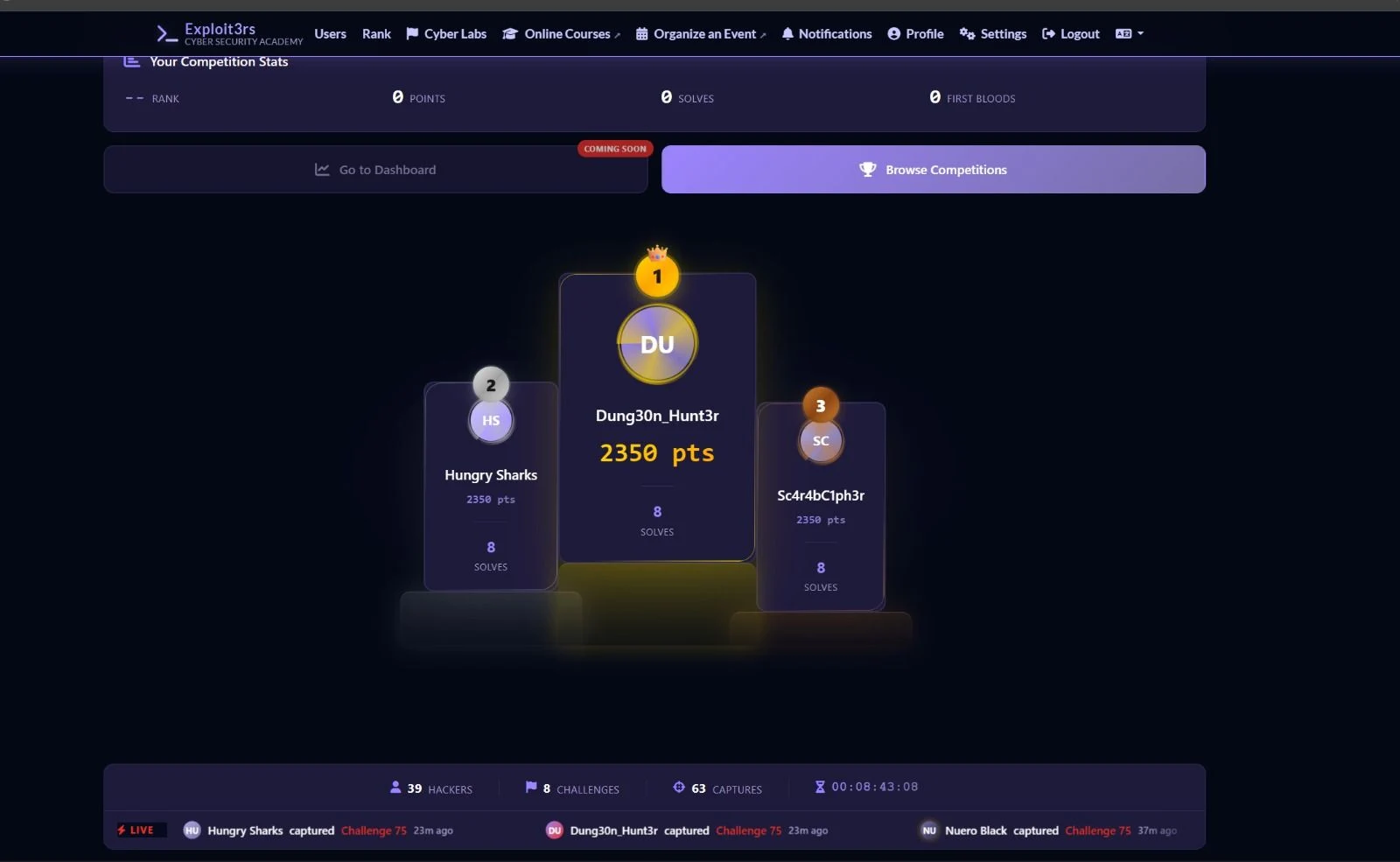
3rd placeTeam Sc4r4bC1ph3r
Exploit3rsJanuary 2026
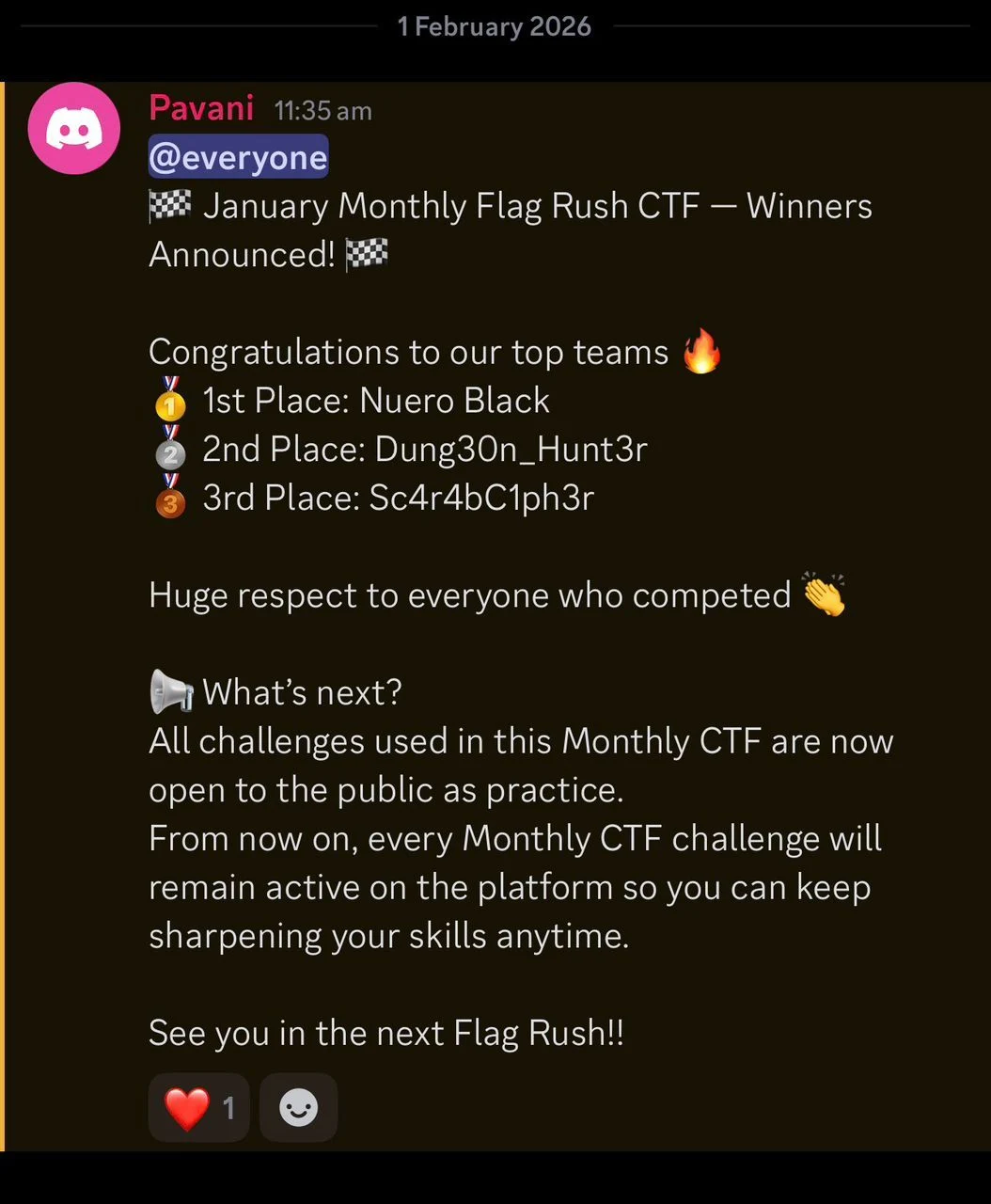
A third-place finish with Sc4r4bC1ph3r in Exploit3rs’ January Monthly Flag Rush CTF.
View image ↗ScreenshotThe Flag Rush podium, with Sc4r4bC1ph3r in third place.View image ↗ScreenshotThe January Monthly Flag Rush winners announcement.
Competition report / 2025
Organized by BarqSec · Supported by Exploit3rs
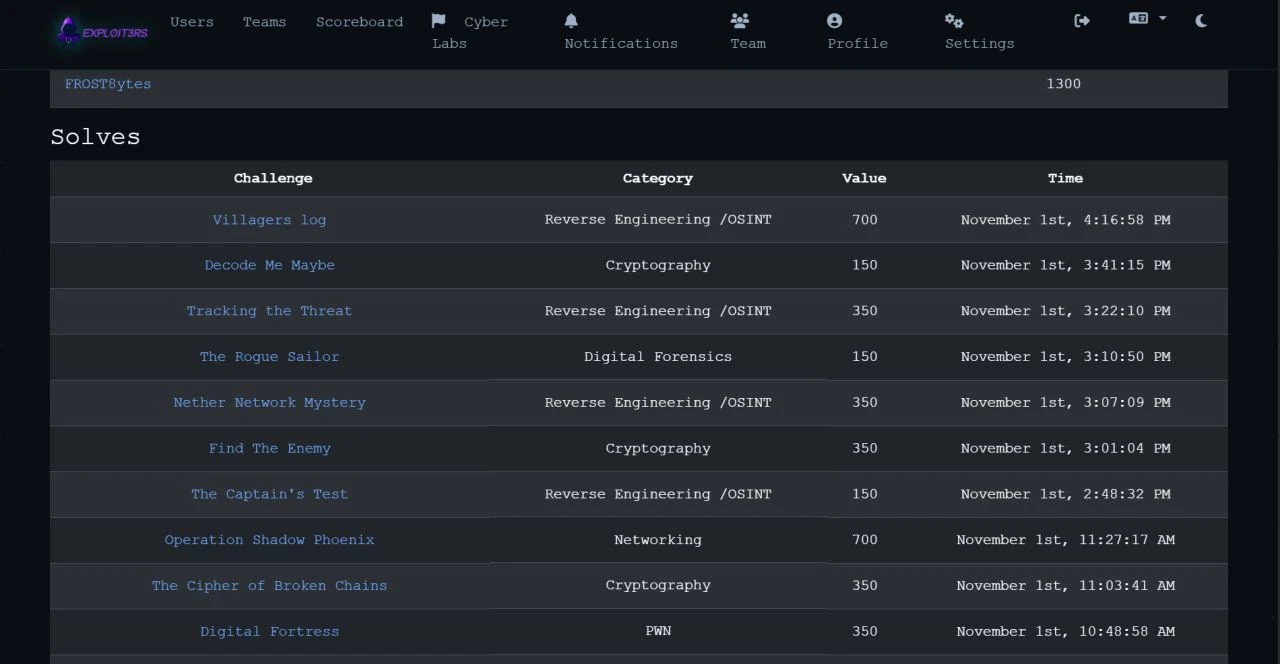
System Override CTF 2025
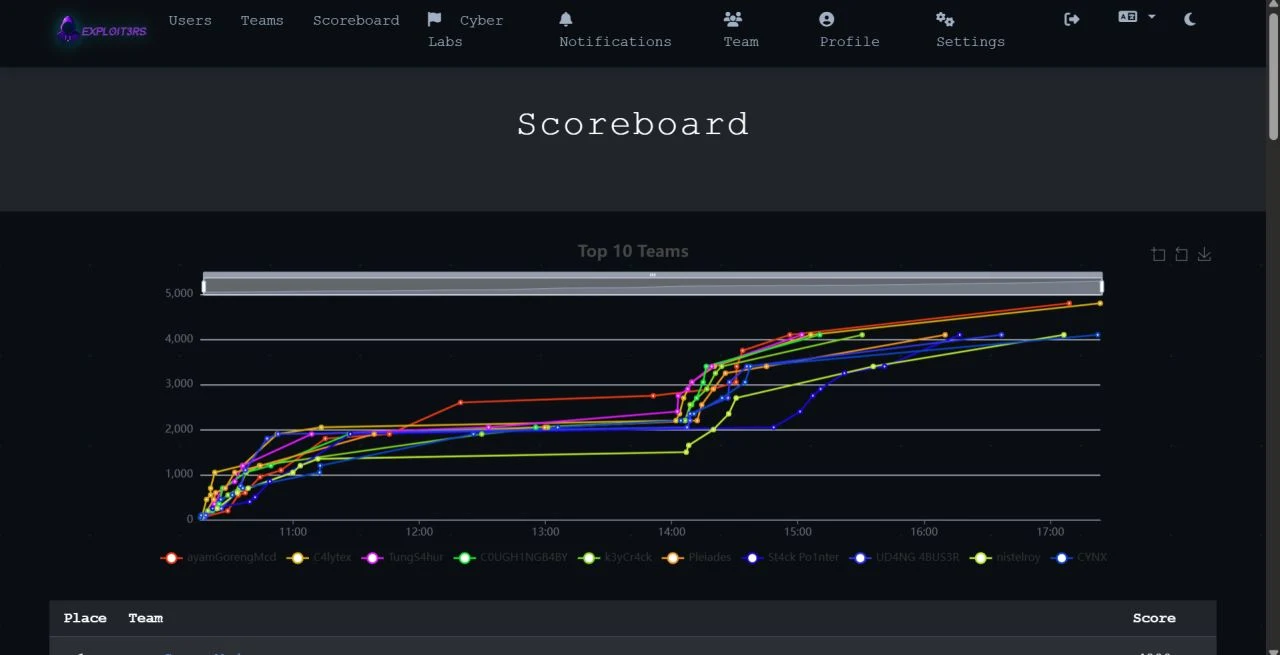
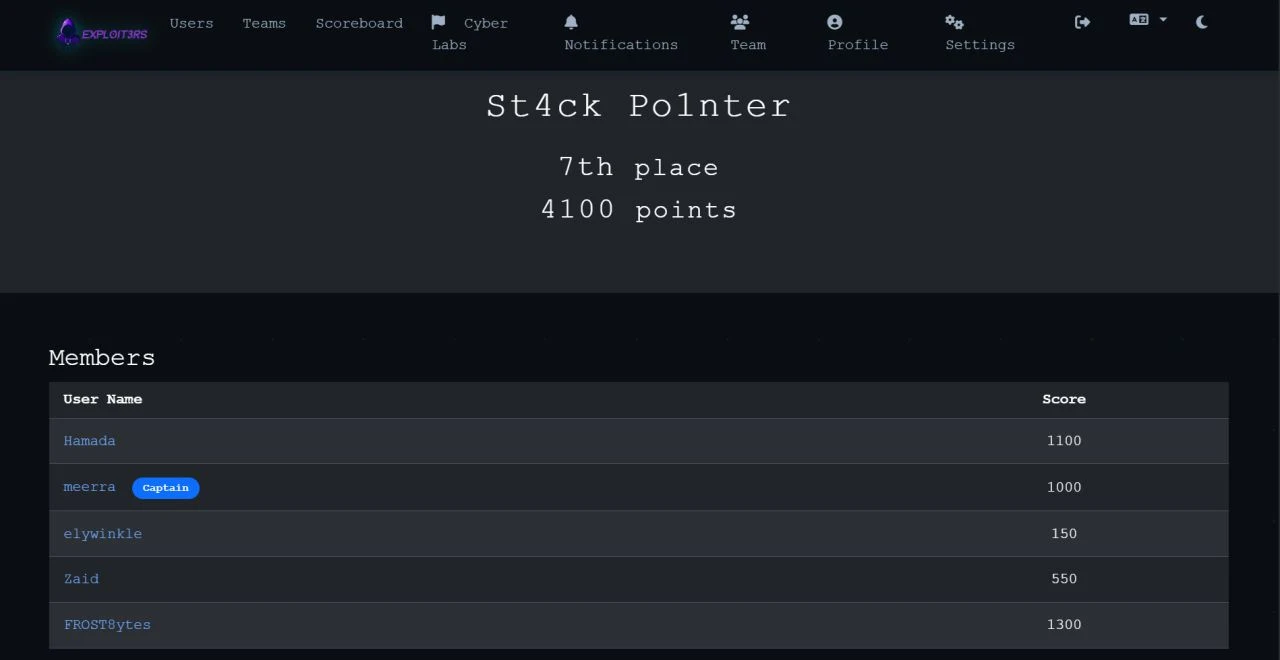
7th placeOut of 70+ teams
Top 104,100 points
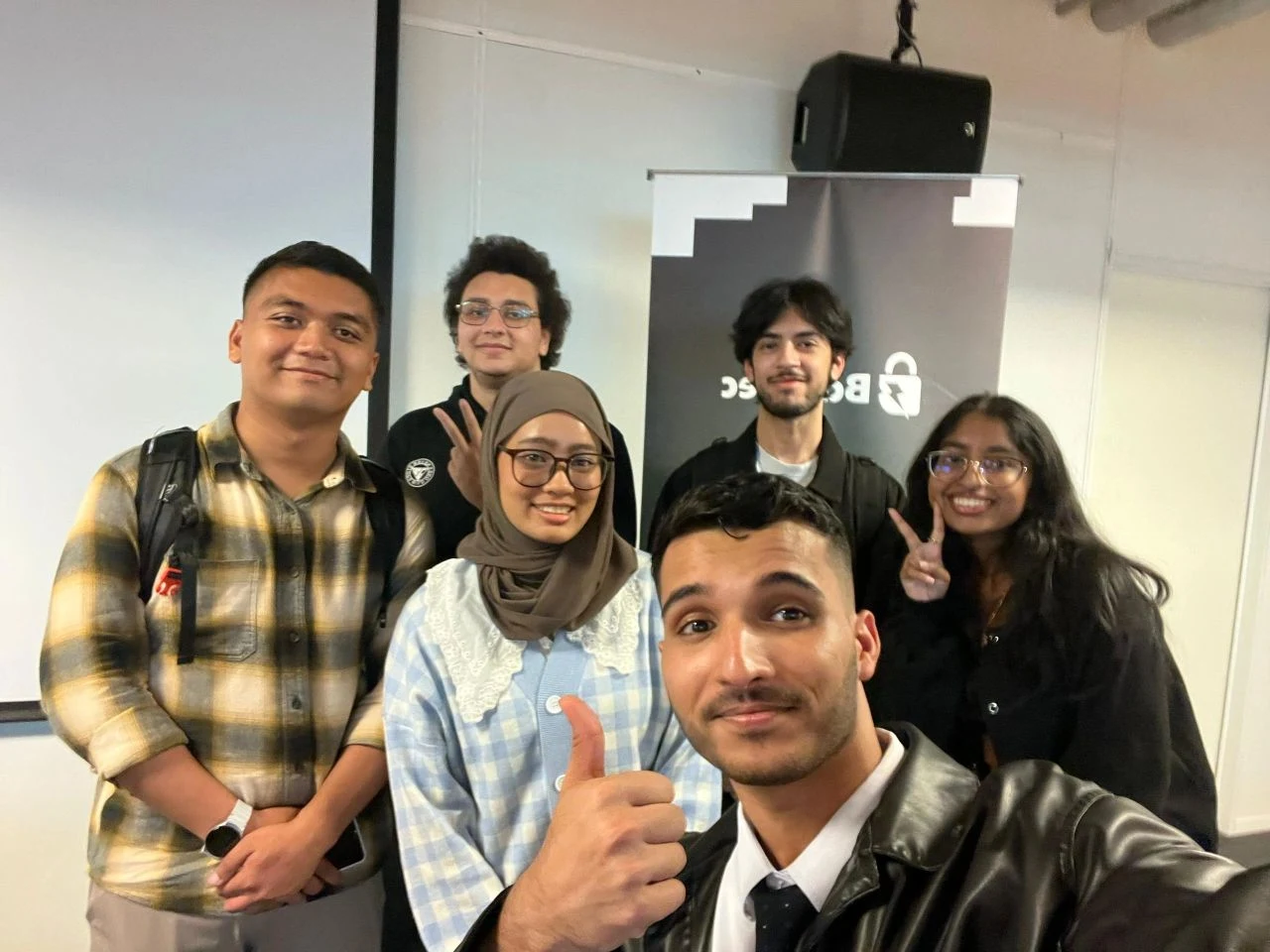
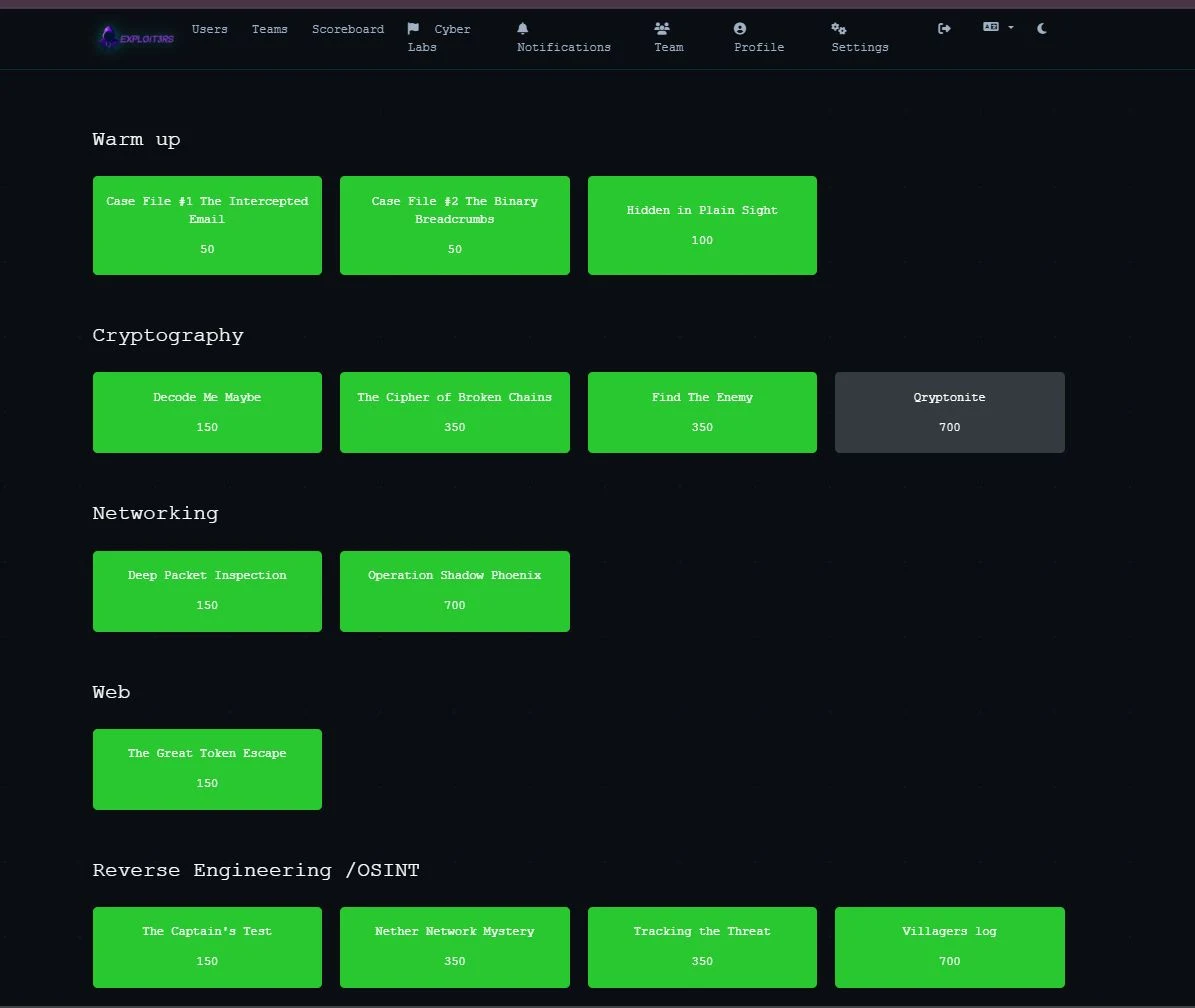
Competing alongside friends across cryptography, networking, web and reverse engineering challenges. We finished seventh in a field of more than seventy teams.
View image ↗PhotographTogether at System Override CTF 2025.
View image ↗ScreenshotThe System Override CTF scoreboard and team progress chart.View image ↗ScreenshotOur team result: seventh place and 4,100 points.View image ↗ScreenshotThe team’s challenge-solve history.View image ↗ScreenshotThe challenge board, from cryptography and networking to web and reverse engineering.
Thanks to the organizers and the team
Thanks to BarqSec, Exploit3rs and the event crew, including Ibrahim M. Gholamy, Gumana Abdullah Alshami and Abduljalil Alanesi. Omar Amoudi helped bring the team together.
Competition report
Hoot Academy minithon
التعلم بالتجربة
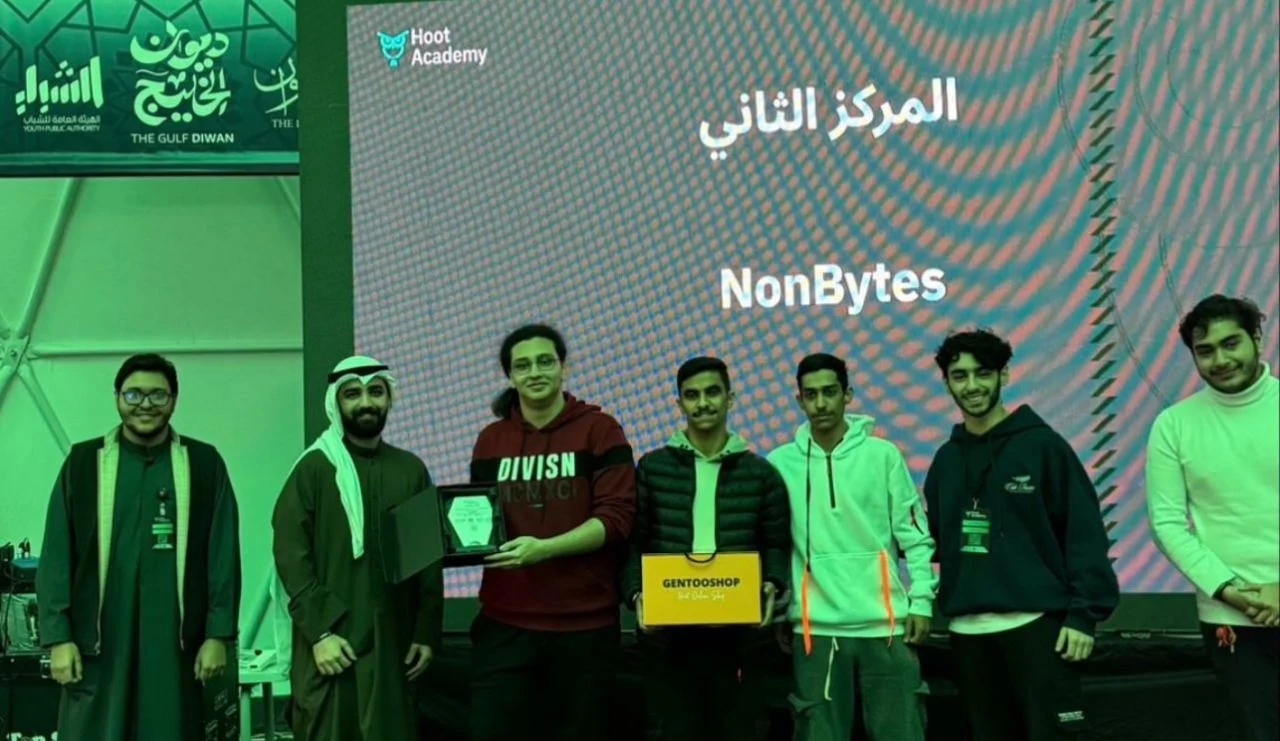
2nd placeTeam NonBytes
Second place with NonBytes in the Hoot Academy minithon. The award photograph and team scoreboard keep the result with the people behind it.
View image ↗PhotographTeam NonBytes receiving second place at the Hoot Academy minithon.View image ↗ScreenshotThe NonBytes member scoreboard.
Competition report / 2024
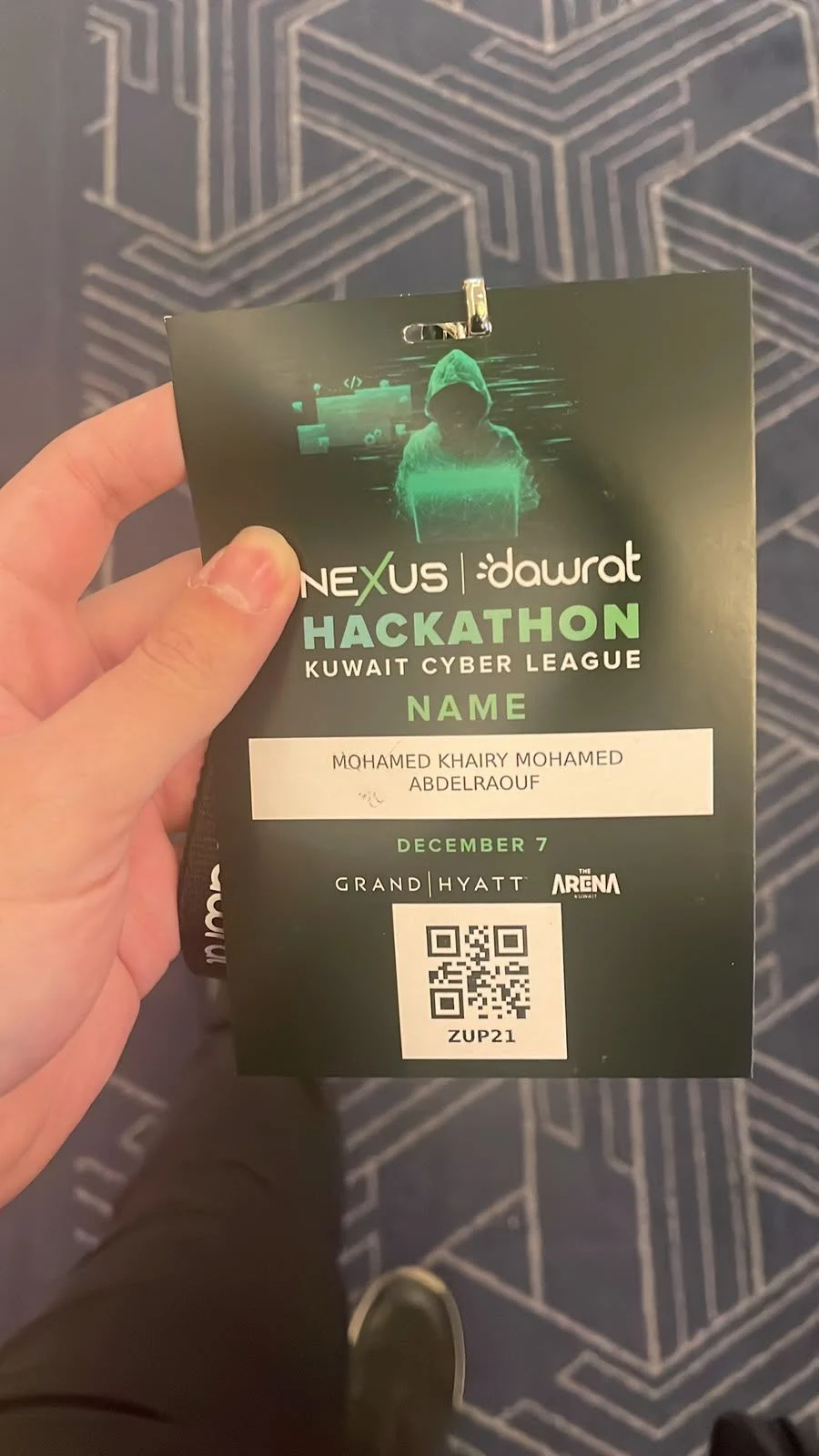
Kuwait Cyber League
من قلب المنافسة
5th placeSecureHoot
A competition record from Kuwait Cyber League, with the event pass and a clip from the venue.
View image ↗PhotographAn event pass from Kuwait Cyber League at SecureHoot.A clip from the Kuwait Cyber League event.Download video ↓
 PNPTPractical Network Penetration TesterOffensive securityListed in my CV ↗